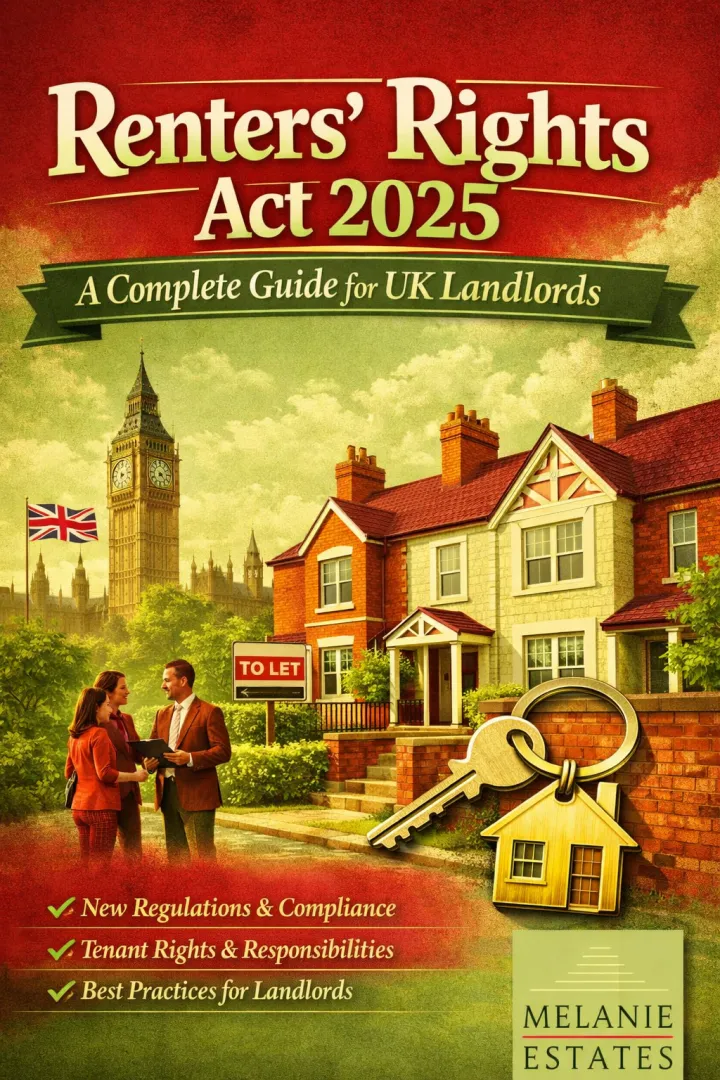
The Renters’ Rights Act 2025 is one of the biggest updates to the private rented sector in more than three decades, and it will reshape how landlords operate across England. The Act introduces new rules on Section 21, rent increases, housing standards, landlord registration and tenant rights, which means clear guidance has never been more important. At Melanie Estates, we know how overwhelming legislative updates can feel, especially when you’re managing active tenancies, upcoming renewals, planning future investments, or dealing with the realities of the local rental market. That’s why we’ve broken down the Act into clear, practical guidance to help landlords across the UK, as well as those here in Norwich, Great Yarmouth and the wider Norfolk area, understand exactly what’s changing and what steps to take. This guide explains the key parts of the Renters’ Rights Act 2025, the actions landlords need to take, and the practical support available to keep every tenancy compliant and low-stress. If you want stability as the Renters’ Rights Act 2025 comes into effect, Melanie Estates offers a Guaranteed Rent service. You receive a fixed monthly income for up to 10 years, with zero void periods, no commission, no court costs and full compliance management handled for you. [Get Guaranteed Rent] The End of Section 21 and the Move to Periodic TenanciesThe Renters’ Rights Act 2025 brings a major shift for landlords, as Section 21 “no-fault” evictions will no longer be allowed. The current Assured Shorthold Tenancy structure will be replaced with periodic tenancies, which continue on a rolling basis instead of ending on a fixed date. This change gives tenants more security and makes it essential for landlords to follow the correct legal process when regaining possession. Landlords will still be able to take back their property when there is a valid reasons The key difference lies in the additional documentation and procedure required to ensure each notice is compliant and enforceable. At Melanie Estates, we conduct thorough tenant referencing to help landlords secure tenants who are more likely to stay long-term, reducing turnover and the costs associated with frequent changeovers. Our tenancy management system keeps every contract, notice and document fully compliant with the new regulations, and we give landlords clear, tailored guidance on how and when they can regain possession through the legitimate grounds set out in the Act. This approach protects income, lowers risk and supports a smoother tenancy from day one. Rent Increase Restrictions and the New Tribunal ProcessThe Renters’ Rights Act 2025 places stronger controls on how and when landlords can increase rent. Rent can now be adjusted only once per year, and any increase must be issued through a formal Section 13 notice. Landlords must give tenants at least two months’ notice, and any proposed increase needs to be evidence-based and in line with local market conditions. This change aims to increase transparency for tenants and consistency across the rental sector. Tenants now have the right to challenge a proposed increase through the First-tier Tribunal. The Tribunal will assess whether the new rent is reasonable for the area, using comparable properties and current market data. This gives tenants a clear route to question increases they believe are unfair, which means landlords need accurate, well-presented evidence to support their decisions. Melanie Estates' Approach Melanie Estates, conducts regular, localised market analysis to ensure every rent review is fair, competitive, and grounded in current conditions. Our tenancy management platform also automates the preparation and delivery of compliant Section 13 notices, removing the risk of administrative errors. If a tenant challenges an increase, we help landlords prepare the correct evidence and guide them through the Tribunal process, ensuring every case is presented clearly and professionally. Ban on Rental BiddingThe Renters’ Rights Act 2025 introduces a clear ban on rental bidding. Landlords and letting agents can no longer encourage applicants to offer above the advertised rent, and they cannot accept higher bids even if a tenant volunteers one. This change aims to create a more transparent and predictable rental process, particularly in competitive markets where bidding wars have made it harder for many tenants to secure a home. The ban also supports fair access. Every applicant must be considered on the same advertised terms, with no pressure to compete financially. This prevents artificial rent inflation and ensures the focus stays on suitability, affordability checks and responsible tenant selection. Melanie Estates' Approach At Melanie Estates, this policy aligns with how we already operate. We have never used rental bidding as part of our process. We firmly believe that fair access to housing starts with transparent, competitive pricing. Our team relies on strong local market research to set realistic and competitive rental prices from the start, which helps properties let quickly without compromising on value. Every applicant is assessed through a structured, impartial offer process that focuses on risk, referencing and fit, not financial competition. This keeps the process fair for tenants, protects landlord reputation and ensures full compliance with the new regulations. Tenants’ Right to Request a PetThe Renters’ Rights Act 2025 gives tenants a new right to request permission to keep a pet in their rental home. Landlords can no longer issue a blanket refusal. Each request must be considered fairly, and the landlord must give a written response within a reasonable timeframe. A refusal must be based on reasonable grounds, such as leasehold restrictions, property layout or issues that make the home unsuitable for certain animals. This new right does not mean every pet request must be approved. It simply requires landlords to follow a clear, fair decision process. With more tenants seeking pet-friendly homes, a structured approach helps prevent disputes and protects the condition of the property. Melanie Estates' Approach Melanie Estates already include pet request clauses in our tenancy agreements and helps landlords create clear terms for approving or declining pets. When pets are accepted, we support landlords by adding specialist cleaning clauses, advising on appropriate insurance to cover pet-related damage, and explaining tenant responsibilities around cleanliness and maintenance. This keeps expectations consistent on both sides and helps landlords remain compliant without losing control over how their property is managed. Guarantor Support for Complex CasesThe Renters’ Rights Act 2025 does not introduce new legislation around guarantors, but it highlights how crucial fair access to tenancies has become. Rising living costs and changes in employment patterns mean more tenants now fall outside traditional referencing criteria. Students, self-employed renters and people with variable income often need a guarantor to secure a property. A straightforward, consistent guarantor process protects landlords while ensuring tenants are not unfairly excluded. Strong documentation also supports compliance, as incorrect or incomplete guarantor agreements can cause complications if issues arise later in the tenancy. Melanie Estates' Approach At Melanie Estates, we maintain flexible and transparent guarantor procedures to support a wide range of tenant circumstances. We accept professional guarantor services, offer rent guarantee insurance through trusted partners such as Goodlord, and ensure every guarantee is legally binding and correctly referenced. This gives landlords confidence in the tenant’s affordability, reduces risk, and helps secure good-quality renters who simply need an additional layer of support. Alongside property standards, rent behaviour also affects how smoothly a tenancy runs. As new tools enter the market, some landlords are considering services like Frugals, a rent reporting service that allows tenants to link rent payments to their credit profile. This model encourages on-time rent payments, supports clearer payment habits, and helps landlords set expectations early by linking rent to long-term financial outcomes for tenants. [Learn More About Frugals] Implementation of the Decent Homes StandardThe Renters’ Rights Act 2025 brings the Decent Homes Standard into the private rented sector for the first time. This standard, previously used in social housing, sets a clear quality standard that every rental property must meet. The goal is to ensure tenants live in homes that are safe, well-maintained and fit for modern living. To meet the Decent Homes Standard, a property must: Be free from serious hazards such as damp, mould, unsafe electrics or structural issues Be in a reasonable state of repair throughout Have modern and functional kitchen and bathroom facilities Provide effective heating and insulation to ensure a reasonable level of thermal comfort
These requirements raise expectations for property condition, and they place a greater responsibility on landlords to carry out repairs proactively rather than waiting for issues to develop. Melanie Estates' Approach At Melanie Estates, we conduct detailed pre-letting inspections to assess whether a property meets the new standard. If improvements are needed, we provide clear, practical recommendations that help landlords stay compliant without unnecessary expense. We also work with a trusted network of local contractors who offer cost-effective solutions, from tackling damp and upgrading insulation to refreshing outdated fixtures. This support helps landlords protect their investment, maintain tenant satisfaction and avoid potential enforcement action. Introduction of Awaab’s LawAwaab’s Law is a key part of the Renters’ Rights Act 2025. It was introduced after the tragic death of Awaab Ishak, a two-year-old boy who lost his life due to prolonged exposure to mould in social housing. The case highlighted serious failings in how damp and mould concerns were handled, and it led to stronger expectations for all landlords to address health and safety issues promptly. Under Awaab’s Law, landlords must: Investigate reported hazards within strict timeframes Carry out repairs within a reasonable period Demonstrate clear action when concerns are raised
These responsibilities apply particularly to damp, mould, leaks, and ventilation issues, as they affect both tenants' health and the long-term condition of the property. The law places accountability on landlords to respond quickly and prevent minor issues from escalating. Melanie Estates' Approach At Melanie Estates, we take a preventative approach to these risks. Our property managers complete quarterly inspections to identify early signs of damp, condensation or leaks before they become serious. We also provide tenants with a starter pack that includes a mould remover spray, radiator bleed keys, a limescale remover, and simple guidance on managing ventilation and boiler pressure. This sets expectations from day one and helps tenants understand how to care for their home to reduce problems. By addressing issues early and maintaining clear communication, we help landlords stay compliant, protect tenants' well-being, and avoid the disruption and costs that come with enforcement action. Expansion of Rent Repayment Orders (RROs)The Renters’ Rights Act 2025 expands the scope and severity of Rent Repayment Orders (RROs). RROs are legal orders that require landlords to repay rent to tenants or local authorities when serious housing offences have been committed. These offences already include letting an unlicensed HMO, unlawful eviction, failure to comply with improvement notices and breaches of banning orders.The Act increases the potential consequences for non-compliance. The maximum penalty is set to rise from 12 months’ rent to 24 months’ rent for the most serious or repeated breaches. Local authorities will also gain stronger enforcement powers, which means landlords must keep their compliance documentation up to date and address issues promptly. Melanie Estates' Approach At Melanie Estates, we help landlords stay on the right side of the law by carrying out comprehensive tenancy and property compliance audits before properties go to market. Our team uses an HMO assessment checklist, monitors all statutory obligations and flags gaps early, from licence requirements to safety certificates and legal notices. This proactive approach reduces the risk of enforcement action and protects both rental income and landlord reputation. Impact on Student LettingsStudent landlords will see notable changes under the Renters’ Rights Act 2025. Purpose-built student accommodation (PBSA), such as university halls and privately built student blocks, is likely to remain exempt. Private student landlords in the broader rental market, however, must adopt the new periodic tenancy model. This shift creates a challenge for landlords who previously relied on fixed-term agreements that aligned with the academic calendar. Traditional student tenancies usually run from September to June or July, giving landlords time to carry out cleaning, maintenance and re-letting before the next cohort moves in. Periodic tenancies remove fixed end dates, making it harder to guarantee this summer turnover period. During the committee stage of the Bill, an attempt to exempt all student rentals from periodic tenancies was rejected. Private student landlords will now need to adapt to this new structure and adopt more transparent communication and management processes to maintain predictable occupancy patterns. Melanie Estates' Approach At Melanie Estates, we work closely with student landlords across Norwich to balance compliance with the realities of academic-year demand. Our strategies include transparent communication about move-out, smarter marketing timelines, and ongoing monitoring of student housing regulations. We specialise in managing high-demand student areas such as West Earlham, Eaton, Cringleford, the Golden Triangle and the City Centre, ensuring landlords stay informed and supported through each stage of the transition. Mandatory Landlord RegistrationThe Renters’ Rights Act 2025 introduces two major registration requirements designed to increase transparency and strengthen standards across the private rented sector. 1. The PRS Property Portal (Landlord Database)Every landlord must register their property on the new national database before it can be advertised. Key compliance documents, such as EPCs and gas safety certificates, must be uploaded during registration. This database will allow local authorities to identify unregistered properties, spot missing documentation, and take enforcement action more efficiently. 2. Landlord Redress SchemeAll private landlords must join a government-approved redress scheme. This gives tenants a clear, independent route to escalate complaints when issues are not resolved directly. The requirement applies even if the landlord already works with a managing agent who is a member of an agent redress scheme. Each landlord must register in their own right. Failure to comply with either requirement may lead to fines and, in some cases, restrictions on marketing the property. These rules place greater focus on record-keeping and timely updates, particularly for landlords managing multiple properties. Melanie Estates' Approach At Melanie Estates, we ensure every landlord we support is appropriately registered, signed up to an approved redress scheme and compliant with all documentation and audit requirements. We monitor legislative updates closely and will notify landlords as soon as the final registration dates and portal links go live, ensuring a smooth, stress-free transition. Our Exclusive Offer for Landlords in Norwich Great YarmouthThe Renters’ Rights Act 2025 imposes new obligations on landlords, and non-compliance could result in significant penalties, including fines of up to £40,000. With standards rising across the sector, landlords need reliable systems, strong documentation and clear guidance to protect their income and avoid costly disputes. At Melanie Estates, we provide complete management services designed to keep every tenancy compliant, transparent and low-stress. Our service is available for a flat fee of 12% inc VAT (10% ex VAT) of the monthly rent, and it covers everything from referencing and inspections to legal notices and ongoing compliance reviews. This gives landlords confidence that their properties are managed in line with the latest regulations. To support landlords in Norwich and Great Yarmouth as the new Act comes into effect, we are offering an exclusive preparation package for the first 100 landlords. This package includes: Tenancy Agreement Health CheckWe review your agreements to ensure they are legally sound and aligned with the new rules. Specialist housing solicitors produce our contracts. Compliance ReviewWe assess your certificates, safety documents and legal obligations, identifying any gaps before they become an issue. Property Condition AdviceWe help you understand what work may be required to meet the Decent Homes Standard and highlight cost-effective improvements. Rent and Tenant Strategy ReviewWe analyse your rent level, tenant fit and long-term plans to help you optimise returns. Free Rent Guarantee and Legal CoverAvailable for landlords who transfer properties with existing tenants. (Subject to terms, including 12 months of uninterrupted rent.) Tenant Welcome PackEvery new tenant receives a starter kit that supports good maintenance habits and encourages long-term satisfaction. This is the most comprehensive support package available in the region and has been created to give landlords clarity and confidence as the Renters’ Rights Act 2025 comes into force. | 

 By The team at Melanie Estates
on 8th Oct 2026
By The team at Melanie Estates
on 8th Oct 2026 




Share this with
Email
Facebook
Messenger
Twitter
Pinterest
LinkedIn
Copy this link